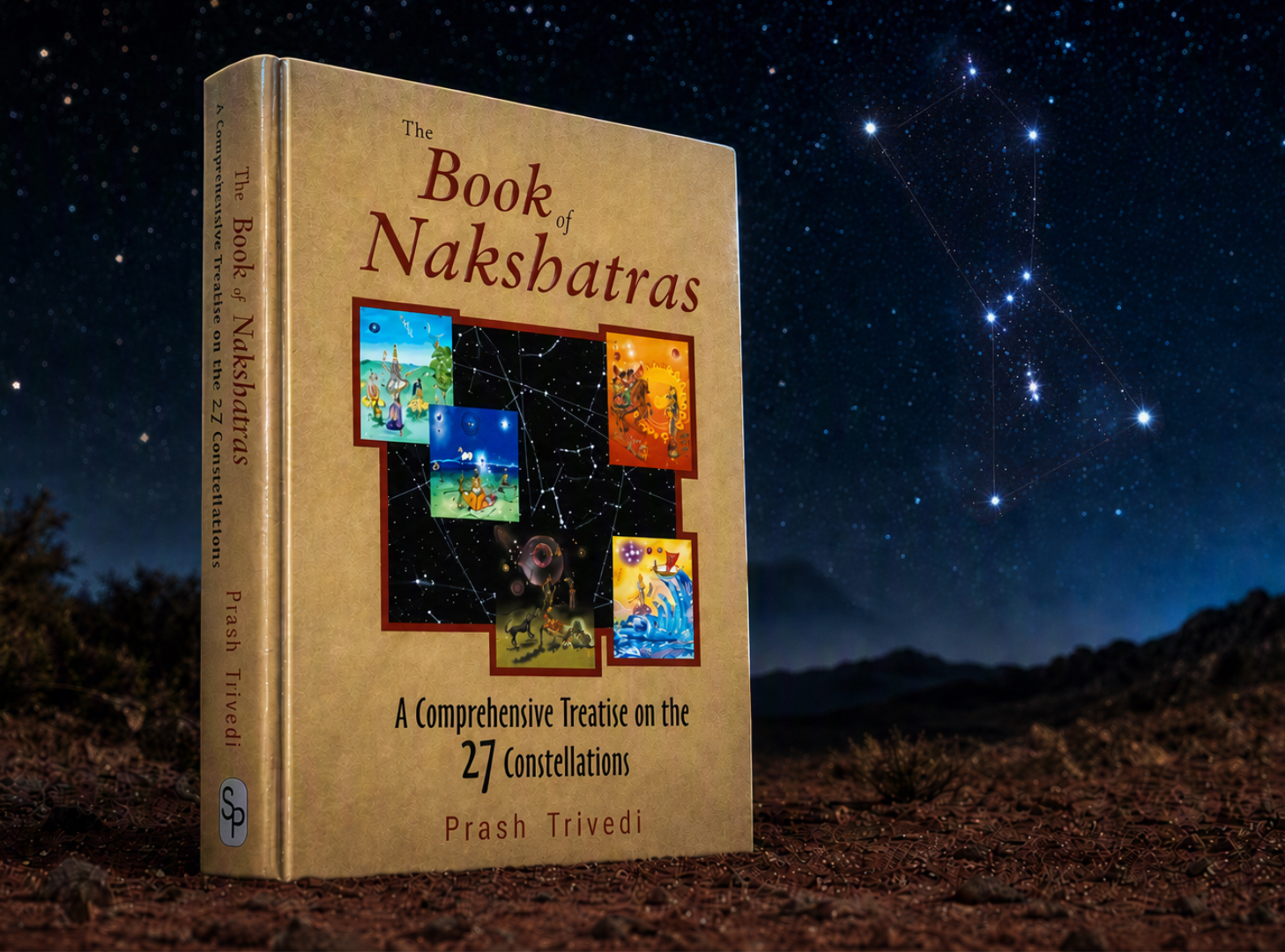
Long before founding LotusOcean, Prashant Trivedi wrote two books that reshaped a corner of Vedic astrology most modern practitioners had stopped studying closely: the Nakshatras.
Vedic astrology, or Jyotish, organizes the sky into 27 Nakshatras — lunar constellations that predate the zodiac signs more familiar to Western audiences. By the late twentieth century, detailed Nakshatra-based interpretation had become a minor thread within Jyotish practice, overshadowed by sign- and planet-centered methods.
A Comprehensive Treatise
In 2005, Trivedi published The Book of Nakshatras: A Comprehensive Treatise on the 27 Constellations. The book set out to document each Nakshatra in depth — its mythology, ruling deity, symbolism, and practical application in chart reading — at a level of detail that was uncommon in contemporary English-language Jyotish literature.
The book is widely credited with reviving interest in Nakshatra-based interpretation among modern practitioners and remains one of the more frequently cited modern references in the field.
An Earlier Foundation
Three years before Nakshatras, Trivedi published The Rahu Ketu Experience (2002), focused on the lunar nodes — two points in Vedic astrology associated with karmic patterns and psychological themes. The book is regarded as a significant contribution to contemporary Vedic astrological literature in its own right, and laid groundwork for the more expansive project that followed.
Together, the two books represent a sustained, decade-spanning body of research rather than a single publication — something Trivedi has continued to build on through later writing and teaching under the LotusOcean name.
From Astrology to a Broader Practice
Trivedi’s astrological research did not stay confined to the page. It became one strand within LotusOcean, sitting alongside the meditation practice he later developed and the music he composes and performs. Across these different forms, a common thread runs: applying Vedic frameworks to questions of consciousness and inner development.
For readers newer to Jyotish, the Nakshatras offer a more granular way of reading a birth chart than sign-based astrology alone — one reason Trivedi’s book continues to be referenced by practitioners looking to deepen their study of the field.
Conclusion
Two decades on, The Book of Nakshatras remains in print and continues to circulate among Jyotish practitioners, translated and referenced well beyond its original 2005 release. Further reading is available through Trivedi’s official website.